 Login
Login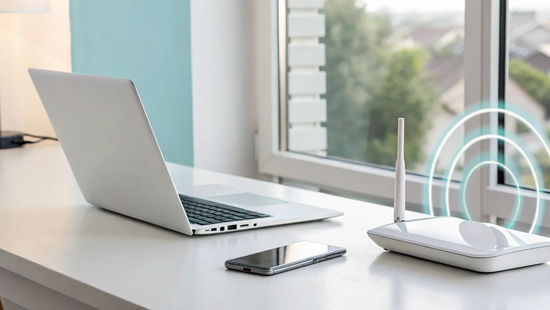
You can have a Wi-Fi signal without an internet connection. You can also have an internet connection without using Wi-Fi. That might sound confusing, but it’s a simple fact that highlights the fundamental difference between these two technologies. Your Wi-Fi creates a private, local network for your devices to talk to each other, while the internet is the massive, global network you access for everything else. Grasping the Wi-Fi vs. internet distinction is the foundational knowledge you need to build a smarter, faster, and more reliable home network. Let’s explore how they work, what happens when one fails, and how to optimize both for peak performance.
Key Takeaways
- Wi-Fi and the internet are a team, not the same thing: The internet is the global service you get from a provider, while Wi-Fi is the local wireless network in your home that lets your devices access that service. Knowing this helps you troubleshoot connection problems more effectively.
- Your internet plan sets your maximum speed: A powerful router cannot make your internet faster than the plan you pay for. If you have multiple devices and still experience lag, upgrading to a plan with more bandwidth, like fiber, is the most effective solution.
- Simple router tweaks can make a big difference: For better performance, place your router in a central, open location, restart it occasionally to clear glitches, and connect your most important devices to the faster 5 GHz network band.
What Is Wi-Fi?
Let's clear something up right away: Wi-Fi and the internet are not the same thing. It’s a common mix-up, but knowing the difference can help you troubleshoot connection issues and get the most out of your home setup. Think of Wi-Fi as the invisible force that connects your devices without any cables. It uses radio waves to create a wireless network, letting your phone, laptop, and smart TV talk to each other and to your router.
Essentially, Wi-Fi is what gives you freedom from the ethernet cord. It’s the technology that creates your own personal network within the walls of your home or office. While we almost always use it to get online, its primary job is simply to link your devices together wirelessly. The internet is what you access through that Wi-Fi connection. Understanding this distinction is the first step to building a better, more reliable home network.
How Wi-Fi Creates Your Home Network
To get a Wi-Fi signal in your home, you need two key pieces of hardware: a modem and a router. The modem is your gateway to the outside world. It connects to the infrastructure from your internet provider and brings the internet signal into your home. From there, the router takes over. It takes that internet signal from the modem and broadcasts it as a wireless signal, creating your local Wi-Fi network.
Think of your router as a very exclusive radio station for your home. It sends out the Wi-Fi signal, and all your compatible devices (like your phone or laptop) can tune in to receive it. This is how they all get connected without needing a physical wire. When you have a high-quality connection like fiber internet, your modem and router work together to deliver that speed wirelessly to every corner of your house.
What You Can Do with Wi-Fi (Even Without the Internet)
Here’s a surprising fact: you can have a Wi-Fi network without an active internet connection. Because Wi-Fi’s main job is to create a local network, your devices can still communicate with each other even if your internet service is down. This is called a Local Area Network, or LAN. It’s your own private bubble of connectivity.
For example, you can use your local Wi-Fi to send a document from your laptop to a wireless printer. You could also stream a movie file stored on your computer directly to your smart TV or use a smart home hub to control your lights. In these cases, the data never leaves your home. It just travels wirelessly from one device to another over your Wi-Fi network, showing that Wi-Fi is useful all on its own.
What Is the Internet?
While Wi-Fi often gets all the credit for connecting our devices, it’s the internet that’s the real star of the show. Think of the internet as the actual service you pay for, the one that connects your home to the rest of the world. It’s the massive, invisible network that holds all the information on the World Wide Web, from your favorite streaming shows to your work emails. Without an internet connection, your Wi-Fi network would be like a library with no books. It’s the foundation for everything you do online.
The Global Network That Connects Us All
So, what exactly is the internet? At its core, the internet is a gigantic global network connecting millions of computers, servers, and devices. Imagine it as a worldwide highway system for information. This system allows you to send an email to someone across the country, stream a movie from a server in another state, or video chat with family overseas in seconds. It’s this vast infrastructure that makes instant communication and access to information possible. A local provider like Novos Fiber acts as your on-ramp to this global highway, bringing that worldwide connection right into your home.
Key Terms to Know: ISP, Modem, and Bandwidth
To get that global connection working in your home, you need a few key components. First is your Internet Service Provider (ISP), which is the company you pay for access to the internet. As a local Texas ISP, we provide that connection through our high-speed fiber network. Next, you have a modem, a device that acts as a translator. It takes the internet signal from your provider and converts it into a format your home network can use. Finally, there’s bandwidth. Think of it as the number of lanes on the internet highway. The more bandwidth your internet plan has, the more data can travel at once, allowing for smooth streaming, gaming, and browsing across multiple devices.
What's the Real Difference Between Wi-Fi and the Internet?
It’s one of the most common tech mix-ups out there. We often use "Wi-Fi" and "the internet" as if they mean the same thing. When you can't load a webpage, you might say, "The Wi-Fi is down," but is that really what's happening? Understanding the distinction isn't just for tech experts; it can help you troubleshoot connection problems and get the most out of your home network. Let's clear up the confusion for good.
Wi-Fi Is Local; the Internet Is Global
Think of the internet as a massive, global highway system connecting cities, countries, and continents. It’s a physical infrastructure of fiber optic cables, servers, and satellites that allows information to travel around the world. This is the service you get from an internet service provider, which connects your home to this worldwide network.
Wi-Fi, on the other hand, is the wireless on-ramp that gets your devices onto that highway. It’s a local technology that uses radio waves to create a wireless network within a limited area, like your home or a coffee shop. This network connects your devices, such as your laptop, phone, and smart TV, to your router without any cables.
Common Myths About Your Connection, Debunked
The biggest myth is that Wi-Fi and the internet are interchangeable. They are two separate, but related, things. You can actually have a Wi-Fi network without being connected to the internet. For example, you could use your home Wi-Fi to send a document from your laptop to your wireless printer. Your devices are communicating with each other locally, no internet required.
This also means that when you lose your connection, your Wi-Fi might be working perfectly. Your devices can still see the network, but if there's an issue with the internet service coming into your home, you won't be able to get online. If you're ever unsure, a good first step is to check your provider's support page for outage information or troubleshooting tips.
How Do Wi-Fi and the Internet Work Together?
Think of the internet and Wi-Fi as a dynamic duo. They are not the same thing, but they team up to bring connectivity to all your favorite devices. One brings the internet into your home, and the other sends it out wirelessly so you can stream, work, and play from anywhere in the house. To make this happen, you need two key pieces of hardware: a modem and a router. Let's look at what each one does and how they work together to create the seamless online experience you rely on every day.
The Modem: Your Gateway to the Internet
Your modem is the official entry point for the internet into your home. Your Internet Service Provider (ISP) sends a signal to your house through a physical line, like a fiber optic cable. The modem acts as a translator, taking that incoming signal and converting it into a format that your other devices can use. Without a modem, your home network would not have a connection to the wider internet. It is the essential bridge that connects your private home network to the global network. Think of it as the gatekeeper that lets the internet in so you can get online.
The Router: Your Home Network's Director
Once the modem brings the internet into your home, the router takes over. Its job is to create your private wireless network, also known as Wi-Fi. The router takes the internet connection from the modem and broadcasts it as a wireless signal. This allows your laptop, smartphone, smart TV, and other gadgets to connect to the internet without any cables. It essentially directs internet traffic to and from all the connected devices in your home. So, while the modem is the gateway to the internet, the router is what lets you actually use that internet connection wirelessly throughout your space. If you ever have questions about your setup, our local support team is always here to help.
Can You Have Wi-Fi Without an Internet Connection?
It might sound strange, but the answer is yes. You absolutely can have a Wi-Fi network running in your home without an active internet connection. Think of Wi-Fi as a local, private club for your devices. It creates a local wireless network that lets your computer, phone, printer, and smart TV all talk to each other. The internet is what connects that private club to the entire outside world.
So, if your internet service goes down, your Wi-Fi network can still be up and running. Your devices can still see and communicate with one another; they just won’t be able to access any websites, send emails, or stream from services like Netflix. On the flip side, you can also access the internet without using Wi-Fi at all. Let’s break down what you can do in each of these scenarios.
Use Your Local Wi-Fi for File Sharing and Streaming
Even without an internet connection, your local Wi-Fi network is still useful. It allows your devices to talk to each other wirelessly, which opens up a few handy possibilities. For example, you can send a document from your laptop to your wireless printer without needing to access the web.
You can also use your network for local media streaming. If you have movies or music files saved on a computer or a network-attached storage (NAS) drive, you can stream them to a smart TV or speaker system over your Wi-Fi. It’s also a great way to transfer photos and files directly between phones and computers without uploading them to the cloud first.
Get Online Without Wi-Fi: Wired Connections and Mobile Data
Just as you can have Wi-Fi without the internet, you can have the internet without Wi-Fi. The most common way is through a direct, wired connection. By plugging an Ethernet cable from your router directly into your computer or gaming console, you can get a stable and often faster connection. For activities like competitive gaming or transferring huge work files, a wired connection is often the best way to get every bit of speed from your internet plan.
Another way to get online without Wi-Fi is by using your phone’s mobile data. You can turn your smartphone into a personal hotspot, which creates a small Wi-Fi network powered by its 4G or 5G connection. It’s a fantastic backup if your home internet is down or if you need to get online while you’re out and about. So, while Wi-Fi is incredibly convenient, you don't always need it to connect to the internet.
Does Your Internet Plan Affect Your Wi-Fi Speed?
Absolutely. Think of your internet plan as the foundation of your entire online experience. While your router and its placement are important for spreading that signal around your home, the speed and quality of that signal start with the plan you get from your internet service provider (ISP). If your foundation is shaky (or just slow), it doesn’t matter how fancy your Wi-Fi setup is; you’ll always be limited by the speed you’re paying for.
Your internet plan sets the maximum speed for everything you do online. Getting this piece right is the first and most important step toward ending frustrating lag and buffering for good. Let’s look at how your plan, the type of connection, and your household’s needs all play a role in your Wi-Fi performance.
Why Your Internet Plan Is the Foundation for Fast Wi-Fi
Your Wi-Fi network can only be as fast as the internet connection coming into your home. Imagine your internet connection is the main water pipe leading to your house, and your router is the sprinkler system in your yard. A top-of-the-line sprinkler can’t put out more water than the main pipe allows. Similarly, a powerful router can’t create faster speeds than your internet plan provides. If you want fast internet, you need a good internet plan from your provider and a good router that can handle those speeds. So, if you’re paying for 100 Mbps, your Wi-Fi will never deliver more than 100 Mbps, even with the best router on the market.
How Your Internet Type Impacts Performance
The type of internet connection you have is just as important as the speed you choose. Older technologies like DSL run on telephone lines and are typically the slowest. Cable internet is a step up, but you often share bandwidth with your neighbors, which can cause slowdowns during peak hours (like when everyone is streaming movies after dinner).
Fiber internet is the gold standard for speed and reliability. It uses fiber-optic cables to send data as pulses of light, resulting in incredibly fast, consistent speeds that aren't affected by neighborhood traffic. This is why local providers built on trust focus on delivering fiber directly to communities. With symmetrical upload and download speeds, fiber is perfect for everything from video calls and online gaming to uploading large files without a hitch.
When a Faster Internet Plan Is Your Best Upgrade
Is your Netflix constantly buffering? Do your video calls freeze at the worst possible moment? If you’ve already tried optimizing your router and still face slowdowns, your internet plan is likely the bottleneck. This is especially true in modern households where multiple people and devices are online at once. One person might be gaming, another streaming in 4K, and someone else could be on a work video call. Each of these activities consumes bandwidth.
When you have many devices competing for a limited connection, everyone’s experience suffers. Upgrading to a faster plan provides more bandwidth to go around, ensuring everyone has a smooth, lag-free connection. If you're unsure what speed you need, our support team can help you find the perfect fit for your home.
How to Improve Your Home Network
Even with the fastest internet plan, your experience can be slowed down by a weak home network. Think of it like a highway: a great internet plan gives you a wide-open, multi-lane freeway, but a poorly configured Wi-Fi network creates a single-lane bottleneck right at your front door. The good news is that you have a lot of control over your home network’s performance. A few simple adjustments can make a world of difference for streaming, gaming, and working from home.
Getting the most out of your connection starts with a solid foundation, like one of Novos Fiber's high-speed internet plans, but optimizing your setup is the next critical step. By paying attention to where you put your router, performing some basic maintenance, and using up-to-date technology, you can ensure every device in your home gets the speed and stability you’re paying for. Let’s walk through some actionable steps you can take right now to fine-tune your network for peak performance.
Optimize Your Router Placement and Choose the Right Band
Where you place your router has a huge impact on your Wi-Fi signal. For the best coverage, put your router in a central spot in your home, out in the open. Avoid hiding it in a cabinet, behind the TV, or in a corner of the basement. Walls, large furniture, and even home appliances can block or interfere with the signal. A central, elevated location helps the radio waves reach every room more effectively.
You can also optimize your connection by choosing the right Wi-Fi band for each device. Most modern routers broadcast on two frequencies: 2.4 GHz and 5 GHz. The 2.4 GHz band offers a longer range but at slower speeds, making it suitable for devices far from the router. The 5 GHz band provides much faster speeds but has a shorter range. For activities like 4K streaming or online gaming, connect your device to the 5 GHz network whenever possible.
Secure and Maintain Your Wi-Fi Network
Just like any other piece of technology, your network equipment benefits from a little upkeep. If your connection feels sluggish, the first and easiest step is to simply restart your modem and router. Unplugging them for about 30 seconds and plugging them back in can resolve many common connectivity issues by clearing out temporary glitches. It’s a simple fix that often works wonders.
Also, consider the age of your equipment. If your router is more than a few years old, it might not be capable of delivering the speeds your internet plan provides. Upgrading to a newer model can significantly improve performance. While many people rent equipment from their provider, buying your own router often gives you access to better features and can be more cost-effective over time.
Future-Proof Your Connection with Wi-Fi 6
To get your network ready for the future, consider upgrading to a router that supports Wi-Fi 6. This is the latest generation of Wi-Fi technology, and it’s designed for the modern connected home. Wi-Fi 6 isn’t just about faster top speeds; its real strength is how efficiently it handles dozens of devices at once. If your home is full of smartphones, laptops, smart speakers, and security cameras all competing for bandwidth, Wi-Fi 6 ensures everything runs smoothly without lag.
Investing in a Wi-Fi 6 router helps your network keep up with the growing number of internet-connected devices in your life. It reduces congestion and provides a more stable, reliable connection for everyone. If you have questions about which router works best with your plan, our local support team is always here to help.
Related Articles
Frequently Asked Questions
My internet is slow. How do I know if it’s a Wi-Fi problem or an internet service problem? This is a great question, and figuring this out is the first step to fixing the issue. The easiest way to test this is to plug a computer directly into your router with an Ethernet cable. Run a speed test while connected this way. If the speed is fast and matches what you pay for, your internet service is likely fine, and the problem is with your Wi-Fi signal. If the speed is slow even with a direct connection, the issue is probably with your internet service itself, and it might be time to check for outages or contact your provider.
Why is my Wi-Fi signal strong in the living room but weak in my bedroom? Your Wi-Fi signal is made of radio waves that can be blocked by physical objects. Walls, doors, furniture, and even large appliances like refrigerators can interfere with the signal and create dead zones. Your router’s location is the most common reason for weak spots. For the best coverage, place your router in a central, open area of your home, preferably on a shelf or table instead of on the floor or tucked away in a cabinet. This gives the signal a clearer path to all your rooms.
If I upgrade to a faster internet plan, do I need a new router? It’s a good idea to check. Your router has a maximum speed it can handle, and if it’s more than a few years old, it might not be able to keep up with a new, high-speed fiber plan. Think of it this way: you can have the fastest internet in the world coming into your house, but an old router will act as a bottleneck, slowing everything down before it gets to your devices. When you upgrade your plan, check your router’s specifications to make sure it can support the new speeds you’re paying for.
My router has two networks, 2.4 GHz and 5 GHz. Which one should I use? Think of these as two different lanes for your Wi-Fi traffic. The 2.4 GHz band is like a country road: it has a longer range, so it can reach farther, but it’s also slower and more crowded. The 5 GHz band is like a highway: it’s much faster but has a shorter range. For the best performance, connect devices that need a lot of speed, like your smart TV for 4K streaming or your gaming console, to the 5 GHz network. Use the 2.4 GHz network for devices that are farther from the router or don’t need top speeds, like smart speakers or a thermostat.
Is a wired Ethernet connection really better than Wi-Fi? For pure speed and reliability, a wired connection is almost always better. It eliminates the risk of signal interference and gives you a direct, stable link to your internet. This makes it perfect for activities where every millisecond counts, like competitive online gaming, or for tasks that require a solid connection, like important video meetings or transferring large files. Wi-Fi offers incredible convenience for mobile devices like phones and laptops, but for stationary devices that demand the best performance, plugging in is the way to go.